Incident reports often tell us what happened. The harder question is whether they reveal enough about why it happened.
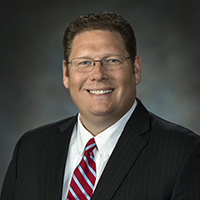
By J. Fritz Kin, CSP, CET, CHMM · Chief Safety Officer, Valorian
Industrial refinery walkway at dusk with safety railings and process piping
The Problem With How We Investigate Safety Incidents
Over the course of my career at Marathon Petroleum Company, I had many opportunities to bring Safety Leaders together for meetings, Safety Summits, and business reviews. At some point during those sessions, the conversation almost always turned to recent incidents and accident reports. I would often ask the same question: “How many times have you read an incident report and asked yourself, or been asked by your boss, ‘Why would our employee do that? Why would they take that shortcut, use the wrong tool, or take that risk?’”
Almost everyone in the room had asked that question at some point.
On the surface, many incidents can seem random or completely out of alignment with the safety culture an organization believes it has built. Unfortunately, after more than 30 years working in safety leadership, I have come to believe that many of those incidents are not random at all. In some cases, the organization itself is influencing, and sometimes even unintentionally encouraging, the very behavior that later becomes the focus of the investigation.
Marathon Petroleum Company maintained a strong commitment to safety, and the observations I am sharing here are not about one company. They reflect broader dynamics I have seen throughout the refining, petrochemical, and industrial services industries.
Looking Beyond the Individual
When an employee uses the wrong tool, takes a shortcut, or skips a critical step in a procedure, it is easy to look at the individual first. Sometimes that is appropriate. People make mistakes, and employees still have responsibility for their decisions. But if we stop there, we often miss the conditions that made that decision more likely in the first place.
Behavior does not happen in isolation. Employees make decisions within the environment their organization creates. They pay attention to what leadership talks about, what supervisors react to, what gets rewarded, what gets measured, and what seems to matter most when there is pressure to get the work done. An organization may say that safety is the highest priority, but if employees consistently see more attention given to production speed, cost control, schedule performance, or beating a target, they begin to understand which priorities carry the most weight.
I recently spoke with the leadership team of a contractor company that had experienced a very serious incident. During the discussion, the leaders described the extensive safety procedures they had in place for the operation involved. Employees had been trained, expectations had been documented, and from leadership’s perspective, the process was clear. Yet on the day of the incident, the employees and the supervisor did not follow the established procedures for job-site setup and tool maintenance, and those decisions contributed to the circumstances that led to the incident.
At first, the situation seemed difficult to explain. The procedures existed. The workforce had been trained. Why, then, would the employees choose not to follow them?
As the conversation continued, a different picture began to emerge. The leaders acknowledged that they rarely, if ever, audited whether the procedures were actually being followed in the field. They also acknowledged that employees were primarily incentivized based on how quickly they could complete work. Supervisors were rewarded as well, both financially and through access to more desirable jobs, if they beat schedules and completed more work.
Once you understand that, the behavior begins to look less random. The organization had established one set of expectations through its safety procedures and another through the way performance was rewarded. The employees were operating inside both systems at the same time.
That does not mean anyone told them to ignore safety. In most organizations, nobody does. The problem is usually more subtle than that. People learn what really matters through repetition. If speed is consistently praised, production is constantly discussed, and stopping work creates frustration or puts a schedule at risk, employees begin to respond to those signals. Over time, those signals can become more influential than the written procedure.
This is where safety culture and organizational alignment become inseparable. Executives and senior leaders use goals, metrics, incentives, and performance systems to shape behavior. Those systems are necessary. They help organizations execute strategy, control costs, meet customer commitments, and improve performance. The problem comes when the strategic message at the top does not match the operational reality on the front line.
A frontline supervisor may be accountable for both safety and production, but those two expectations are not always supported equally. Many supervisors have come up through the ranks and know the work extremely well. They understand how to get the job done, how to keep a crew moving, and how to meet a schedule. What I have seen far too often, however, is that those same supervisors have received very little training on how to lead for safety.
That matters because supervisors influence safety culture in ways they may not even recognize. Their reactions, body language, priorities, and day-to-day decisions tell the workforce what is truly important. A supervisor may never tell an employee to take a shortcut, but if they become visibly frustrated every time someone raises a concern, stops a job, or slows the work because something does not look right, the crew notices. They understand the message even if it was never spoken.
Workers are smart. They notice the gap between what leaders say and what leaders actually reward. When that gap grows, trust begins to erode. Employees become less willing to raise concerns, report near misses, challenge a decision, or participate meaningfully in safety programs. At that point, the organization may believe it has a safety culture because the policies, training, and processes are in place, while the workforce is experiencing something very different.
Understanding How Work Really Gets Done
Another issue I have seen repeatedly is that leaders and managers can become disconnected from the way work is actually being performed in the field. They may rely on procedures, planning meetings, or their own experience from years earlier to understand the job. Those things are useful, but they do not always reflect current field conditions.
The reality of the work may include tight spaces, equipment limitations, tool substitutions, staffing shortages, schedule pressure, access problems, or workarounds that crews have developed over time. Those conditions may be obvious to the employees doing the job every day and nearly invisible to the leaders reviewing the work from a meeting room.
When leadership does not fully understand that reality, incident reviews can become too focused on the final action. Someone used the wrong tool. Someone skipped a step. Someone did not follow the procedure. The corrective action then becomes retraining, revising the procedure, or increasing oversight.
Those actions may be necessary, but they are often incomplete.
The more important question is why the employee believed that decision was acceptable, necessary, or simply the easiest way to get the work done. Was the correct tool unavailable? Was the procedure unrealistic for the actual working conditions? Was there pressure to stay on schedule? Had the shortcut become common practice? Had supervisors seen it before and allowed it to continue? Those are the kinds of questions that begin to uncover the real source of risk.
What my experience has shown me is that lasting safety improvement does not come from simply writing more rules or increasing oversight. It comes from understanding how work is actually being done and making sure the organization’s systems support the behaviors it says it expects.
That means leaders need to spend time in the field. They need to talk to workers, observe the job, understand where the pressure points are, and ask employees what gets in the way of doing the work the way the procedure says it should be done. It also means examining incentives and performance measures to make sure they are not unintentionally rewarding behavior that conflicts with safety expectations.
It means giving employees confidence that they can identify hazards, stop work, and raise concerns without being treated as the problem. It means recognizing people when they prevent an incident, not just when they complete work faster. And it means developing frontline supervisors as Safety Leaders, not simply promoting strong workers and assuming they already know how to lead people through risk.
Asking a Better Question
Safety is not random, and neither is risk. When an organization experiences an incident, it is easy to ask, “Why did that worker do that?” It is a natural question, and sometimes it needs to be answered.
But it should not be the only question.
We also need to ask what the organization may have done to make that decision more likely. What were we rewarding? What pressures existed? What did the supervisor communicate, intentionally or unintentionally? Did the procedure reflect the way the work was actually being done? Did the employee believe they could stop the job without consequences? Had similar shortcuts been tolerated before?
Those questions do not eliminate individual accountability. They make the investigation more complete.
When organizations start looking at both the individual decision and the system surrounding it, they have a much better chance of understanding why an incident occurred and, more importantly, preventing the next one.
That is how safety culture changes. Not through slogans, and not through another rule added after an incident, but by aligning leadership expectations, incentives, supervision, and field conditions so that working safely is also the easiest and most supported way to get the job done.
Ultimately, that is what every safety program should be working toward: creating an environment where people can do their jobs safely and go home to their families, friends, and the reasons they work hard every day.
About the Author
J. Fritz Kin, CSP, CET, CHMM
Chief Safety Officer, Valorian
Fritz Kin, CSP, CET, CHMM, is the Chief Safety Officer at Valorian. With more than 30 years of HSE leadership experience across industrial services, refining, and petrochemical environments, Fritz is recognized for developing practical, field-tested safety programs that reduce risk and improve operational performance. He received the 2023 AFPM Lifetime Achievement Award for his contributions to safety culture and innovation and has spent decades mentoring safety professionals, developing frontline leaders, and guiding executive teams through safety and cultural transformation.